Swan Lake
Out Stealing HorsesSwan Lake is the name the narrator gives to the nearby lake, turning a familiar stretch of water into a place observed through the seasons and shared, briefly, with Ellen. In the winter scenes, the lake’s changing surface and the unseen habits of its Swans draw the narrator’s attention outward; when Ellen visits, the name becomes a small piece of knowledge about the life he has made there.
Name and Setting
The name is personal rather than presented as an official one. The narrator thinks of the lake as Swan Lake, a name he says he gives it “as a child would have done.” The comparison suggests a simple act of imaginative naming: the water is not made grand or mysterious, but made particular, something that belongs to the daily landscape and can be spoken of as part of home.
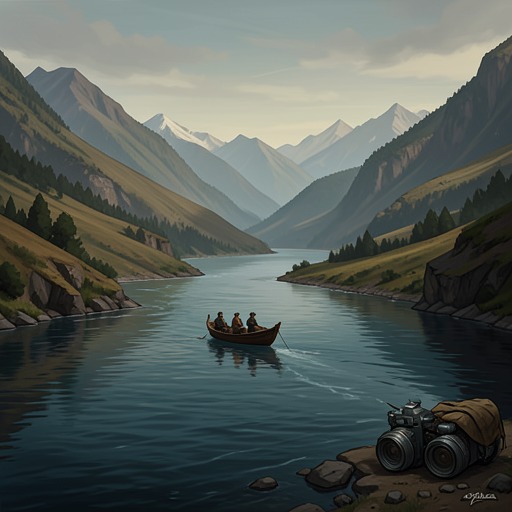
At night the lake lies open and black in the light of a torch. Ice has not yet formed, because the weather has not been cold enough. The bank is edged by snow, and a bench stands at the water’s edge. These details locate Swan Lake in a precise seasonal interval: winter has arrived on land, but the water remains unfrozen. The contrast gives the scene its character. The lake is dark and exposed, while the snow-covered bench offers a place from which to stay still and look.
A Winter Night at the Water
The narrator reaches the bench puffing, clears its snow first with broad circular movements of an arm and then with mittens, pulls a jacket down over the back, and sits. The sequence makes the lakeside visit physical and unceremonious: getting there and making a place to sit require effort, but once settled, the narrator can remain in the darkness and think freely. The lake is not merely scenery beyond the house; it is a destination reached on foot and a setting for chosen solitude.
Lyra accompanies the narrator. At the water, she snorts at the snow and romps, then throws herself down and rolls repeatedly, legs in the air, rubbing her back into the snow. The narrator supposes that she has found the scent of something that passed before them, perhaps a fox, and anticipates having to wash her because of the smell. The dog’s exuberance interrupts the stillness without disturbing it: while Lyra follows a scent through movement, the narrator stays seated beside the lake. Both are attentive to traces in the snow, though in different ways.
The narrator’s attention then turns from the visible lake to the Swans not seen there. They are probably sheltering in dense rushes on dry land through the night, with their heads tucked beneath their wings. The narrator pictures their long necks as feathered loops and imagines them returning to the open water at daylight to feed along the bank. This is observation joined to conjecture, not a claim to have witnessed their nighttime behavior. The Swans’ absence becomes part of the scene: the narrator notices what cannot be seen and tries to understand where the birds are and how they live.
Ice, Light, and Seasonal Change
The lake’s open surface prompts questions the narrator has not yet resolved. What will the Swans do when the ice finally settles? Will they remain until spring, or fly south to lakes that stay free of ice? The narrator wonders whether Swans stay in Norway during winter and decides that this is something to find out. The questions leave the birds’ fate open; the passage records curiosity rather than supplying an answer. Swan Lake is thus a place where ordinary seasonal change leads to attention and inquiry.
On the walk back up the hill, daylight breaks red and yellow. The temperature rises, and the narrator feels the warmth on the face; most of the snow may melt soon, perhaps by evening. That prospect is normally consistent with the weather’s course, but at this moment the narrator would be disappointed by the loss of the snow. The lake scene therefore belongs to a brief condition that may not last: snow lies around the bench, the water remains unfrozen, and the first light is already bringing a change. The narrator’s response makes the weather more than background, registering an attachment to the landscape as it is now.
A View Shared with Ellen
When Ellen comes to the house, she gazes out at the lake. The narrator looks in the same direction and tells her, “I call it Swan Lake.” Her question, “There are swans on it, then?” turns the private name into an opening for conversation. The narrator answers, “There certainly are. Two or three families, that I’ve seen.” The estimate is modest and explicitly limited to what the narrator has seen; it confirms that the name refers to recurring wildlife, without suggesting that every visit reveals the birds.
In this exchange, Swan Lake links the narrator’s solitary routines to a visit from someone else. Its view is available from the house, but the name carries the result of close attention outside: the dark open water at night, the birds’ probable shelter among the rushes, and the families observed on the lake. The narrator offers Ellen a fact about the landscape rather than a full account of private feeling. The lake consequently works as both a concrete place and a quiet means of describing life there—through its weather, its animals, and what can be shared when another person looks out the window.